Every Entrepreneur has faced it — the setback that knocks the wind out of your sails. The failed deal. The exhausted body. The unexpected storm that changes everything.
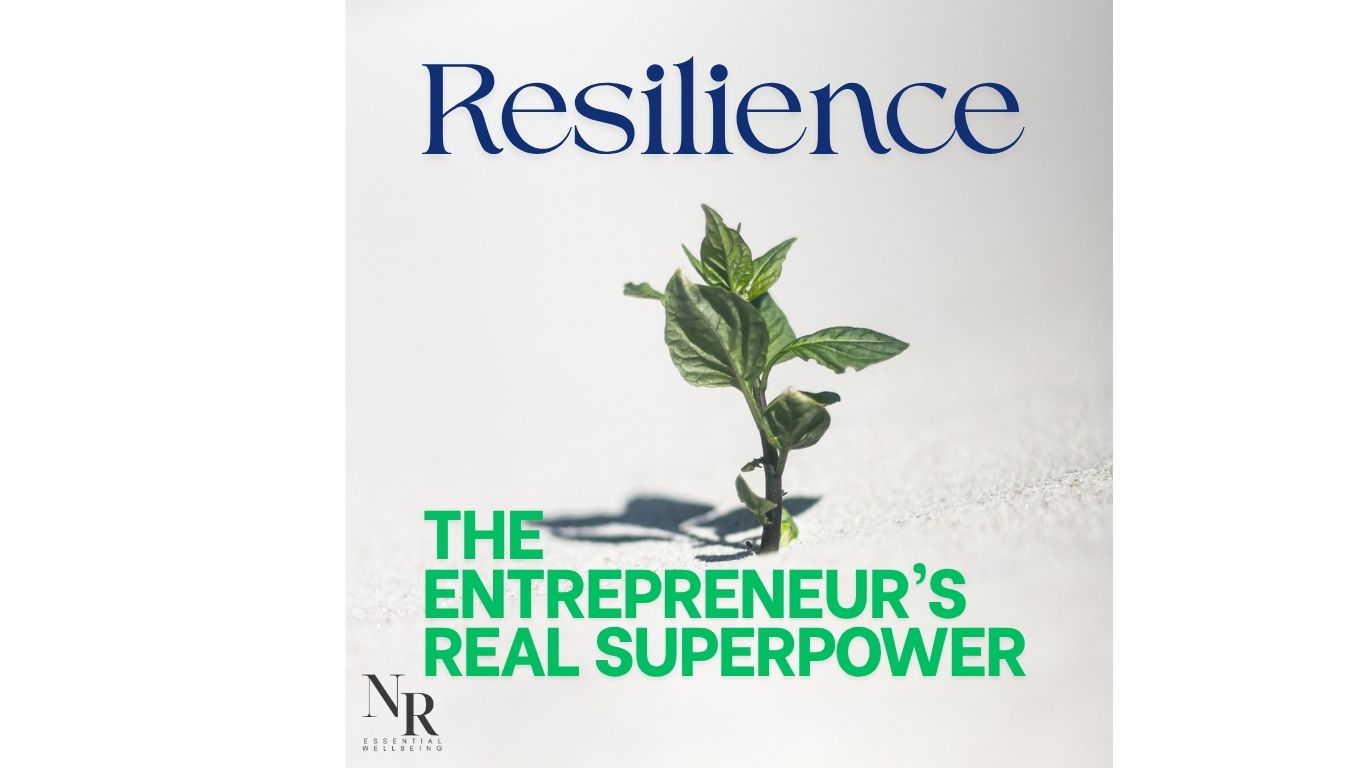
But the real measure of success isn’t how often you fall — it’s how powerfully you rise. That ability to recover, adapt, and thrive again — that’s Resilience, and it’s one of the most essential skills in both business and wellbeing.
We often think resilience is an emotional concept. In reality, it’s biological, psychological, and entrepreneurial all at once. It’s a muscle you can train — and when you do, it changes everything.
What Resilience Really Means
Resilience is often mistaken for toughness. But toughness resists — resilience absorbs and responds. It’s not about ignoring the storm; it’s about learning to bend with it.
In business terms, resilience is adaptability.
In wellness, it’s recovery.
In life, it’s hope that renews itself daily.
Resilience is what allows entrepreneurs to keep showing up — even when results are delayed, the pressure is high, or the path is uncertain. The resilient don’t see failure as a wall; they see it as feedback.
Why Entrepreneurs Need Resilience More Than Ever
Modern entrepreneurship isn’t just about innovation — it’s about endurance. Markets shift, technologies evolve, algorithms change, and yet one constant remains: the person behind it all — you.
Building a business while maintaining health, relationships, and mental clarity requires more than skill. It requires stamina. Resilience protects your creativity when stress threatens to choke it.
It steadies your emotions when uncertainty hits. And it ensures that success, when it comes, doesn’t destroy the balance you’ve built.
The Physiology of Resilience
Your nervous system is your frontline of resilience. When challenges arise, your body triggers a stress response — heart rate increases, cortisol rises, focus narrows.
That’s useful in the short term but damaging if it never switches off.
Chronic stress reduces your immunity, drains energy, and clouds judgment — all of which impact performance and business decisions.
To stay resilient, you must train your body to return to balance faster. Natural wellness routines — balanced nutrition, restorative sleep, mindfulness, and essential oils that help the body relax — aren’t luxuries; they’re tools to build biological resilience. They help your system remember how to reset.
The Mindset of Resilience
Resilient entrepreneurs share a specific mindset. They don’t deny stress; they reinterpret it. They see it as pressure that strengthens rather than breaks.
A resilient mindset sounds like this:
- “This is teaching me something valuable.”
- “Every challenge prepares me for the next opportunity.”
- “I’ve been through worse — and I grew.”
Mindset doesn’t remove difficulty, but it determines the story you tell yourself about it. And the story you tell defines how you recover. Resilient people practice optimism — not blind positivity, but strategic hope.
The Role of Purpose in Resilience
When your “why” is strong enough, your “how” adapts naturally. Purpose fuels resilience like oxygen fuels fire.
Entrepreneurs driven solely by profit often crumble under pressure. Those driven by purpose — by service, impact, contribution — find inner strength that money can’t buy.
Every obstacle becomes meaningful. Every delay becomes refinement. When your work and wellbeing serve a deeper cause, resilience becomes instinctive — because quitting would mean silencing your mission.
Building Physical Resilience
Your body is your business partner. Treat it accordingly. Here’s how to strengthen its resilience daily:
- Nutrition: Choose real, whole foods. Supplement wisely to fill nutritional gaps that stress depletes.
- Hydration: Your brain and muscles depend on it. Dehydration increases fatigue and irritability.
- Movement: Exercise isn’t just physical; it trains the brain to manage stress. Even a walk releases tension.
- Sleep: This is where resilience is rebuilt — physically, mentally, and emotionally.
- Recovery Rituals: Use grounding routines like breathwork, stretching, and natural wellness tools that help restore equilibrium.
Resilient entrepreneurs don’t push harder; they recover smarter.
Emotional Resilience — The Art of Staying Centred
Emotional resilience is your ability to remain calm amid chaos. When clients cancel, markets shift, or personal life collides with professional stress — emotional balance prevents burnout.
Here’s the key: emotional resilience grows from self-awareness. Notice your triggers. Pause before reacting. And surround yourself with people who help you recalibrate instead of feeding the drama.
For many, using mindfulness techniques or grounding aromas can help reconnect with calm during intense moments. A balanced emotional state means you make better decisions and recover faster.
The Entrepreneur’s Energy Management System
Resilience is also about Energy Management. You can’t run at 100% all day — and you shouldn’t try to.
Think of your energy like a battery:
- Some activities drain it (emails, admin, conflict).
- Others charge it (creative work, helping clients, teaching).
The resilient entrepreneur knows how to recharge before hitting empty.
Build daily habits that restore energy:
- Morning clarity routines.
- Midday movement or hydration breaks.
- Evening reflection, gratitude, and rest.
Consistency compounds. Energy doesn’t come from intensity — it comes from rhythm.
Resilience in Business Growth
Every business faces cycles — growth, plateau, challenge, renewal. The ability to adapt through these cycles determines long-term success.
Resilient leaders don’t resist change; they anticipate it. They listen to feedback, pivot quickly, and build systems that can handle uncertainty.
They see downturns as data, not disasters. That’s why resilient entrepreneurs often outlast more talented competitors — because they stay when others stop.
Resilience and the Second Stream
Entrepreneurs who add an additional income stream — particularly one rooted in wellbeing — multiply their resilience.
Why?
- It creates financial cushioning during business fluctuations.
- It provides emotional purpose, knowing you’re helping others improve their lives.
- It keeps you personally aligned with health, balance, and community.
A wellness-based additional income stream isn’t a distraction — it’s diversification of stability. It’s resilience expressed as smart strategy.
You’re no longer dependent on one revenue source or one role. You’re building a holistic life model — sustainable, rewarding, and future-proof.
Resilience in Relationships and Community
No one rises alone. Isolation drains resilience faster than any deadline.
Surround yourself with people who remind you of your capacity, not your limits. Find mentors, peers, and communities that prioritise growth and wellness.
The most resilient leaders aren’t lone wolves — they’re part of strong circles. They collaborate, share, and encourage.
Whether through wellness networks, business masterminds, or purpose-led partnerships — connection builds resilience.
The Science of Recovery
Science shows that the body and brain recover best through balance — alternating between focus and rest.
It’s called ultradian rhythm. When you ignore it, burnout builds. When you work with it, productivity soars.
Schedule recovery into your day:
- 5 minutes of deep breathing.
- 10 minutes of quiet reflection.
- Aromas or natural supplements that trigger relaxation.
- A stretch break or quick walk.
Each reset improves your body’s ability to bounce back — your biological resilience in action.
Mental Flexibility — The Hidden Layer of Resilience
Mental flexibility is the ability to change your perspective quickly. It’s the difference between “This is over” and “This is just another path.”
Rigid thinking breaks under pressure. Flexible thinking bends, learns, and finds new ways forward.
Train mental flexibility through:
- Reading beyond your comfort zone.
- Reflecting on past recoveries.
- Embracing feedback, even when uncomfortable.
- Asking, “What else could this mean?”
The more flexible your thinking, the faster your recovery time.
Spiritual Resilience — The Quiet Power
Spiritual resilience doesn’t have to mean religion. It’s the belief in something bigger than the problem. It’s the deep knowing that every setback serves a purpose — even when you can’t yet see it.
Entrepreneurs with spiritual resilience radiate calm under pressure. They trust the process, act with integrity, and see opportunity where others see endings.
That calm becomes magnetic — clients, partners, and teams feel it.
Resilience as Daily Practice
Resilience isn’t built during the crisis; it’s built before it. It’s forged in small daily disciplines:
- A walk instead of a rant.
- A pause instead of a reaction.
- A healthy meal instead of a sugar fix.
- A gratitude journal instead of self-criticism.
These micro-decisions build a foundation of stability that supports you when life tests your limits.
Your Superpower Awaits
Resilience doesn’t make life easier — it makes you stronger. It transforms chaos into growth, setbacks into strategy, and stress into strength.
You are not defined by how often you fall, but by how powerfully you rise. So fuel your body, fortify your mind, and nurture your wellbeing.
Because resilience isn’t what you have — it’s what you build, one conscious choice at a time.
That’s your real superpower — in business, in wellness, and in life.
If this resonates with you, click below and let’s have a conversation.